A Board Certified Patent Attorney
What Inventors Need to Know About Trade Shows
 You have a great idea for a product invention. You might even have a working sample or prototype of what you invented. Now, you want to get it out into the world and sell it. You might be tempted to take your invention to a trade show to see if you can generate interest from someone who can help you take the product to market. It could be a company that buys patents or makes licensing deals with p... Read More
“I Created a Game. Can I Protect it with a Patent?”
 “Don’t get upset – it’s just a game.” Many of us have heard those words at least once in life, whether they came from a parent who comforted us when we lost our first game of Candy Land®, or from a spouse who couldn’t understand why we were gutted by our favorite team losing the play-offs. Games are not the most important things in life, but they certainly have their value. If they di... Read More
How a Patent Broker Can Help You Sell Your Patent
 The majority of inventors who apply for a patent do so because they want to monetize their idea. They know that a patent establishes legal ownership of an invention, and with that ownership comes the exclusive right to make and/or profit from the invention in the country in which the patent is issued. How Can You Sell Your Own Patent? You can sell your own patent, but it’s far from easy. Where A... Read More
Inventors: Don’t Rely on a Non-Disclosure Agreement (NDA) to Protect Your Idea from Getting Stolen
 If you’re an inventor or product developer with a great idea that you want to profit from, the idea of someone else stealing your idea can be sickening. It’s bad enough to think of someone else pocketing the money you expected to make on your invention, but can imagine also being denied the legal right to make and sell the very thing you invented, while someone else gets rich from it? It can â... Read More
8 Floridian Inventors You Need to Watch & Learn From!
 Wow! 20 years as a practicing Florida board certified patent attorney has flown by yet I still vividly recall just about every inventor who walked into my patent law firm over the past two decades.
Posted By John Rizvi In Blogs, Choosing a Patent Attorney in Florida, Florida Patent Attorney Focused News & Updates, Invention & Patent Basics, Patents Permalink
How Do I Protect My Idea Outside Florida and the United States?
 If you are an inventor interested in protecting your idea outside the United States or mitigating foreign imports from China that impact your market share & profit margins, then my number 1 suggestion is to ask yourself this question: How ambitious are your commercial expansion goals outside the United States? Once you pose this question, it helps formulate a strategy for foreign filings, ... Read More
Inventors, Fortune Favors The Brave
 My recent keynote address to the Inventor Society of South Florida (ISSF) always came back to one word: Courage. While many entrepreneurs and inventors agonize over the cost-benefits calculus of patents and the likelihood their idea can be successfully manufactured, licensed and marketed, I have found the biggest obstacle centers around fear of the unknown. I know this as a fact since I have spent... Read More
Join Me For My First Inventors Society Of South Florida Meeting
 Since 1982, The Inventors Society of South Florida has boldly promoted innovation and provided education on the patenting process! It’s thus with great pleasure I confirm I will be delivering my inaugural address to this well-known inventor institution in the Sunshine State on June 9th, 2018. The focus of my lecture will be on how everyday inventors can strike it rich with their idea by thinking... Read More
Late Night Comedian and Satirist Takes a Swing at Patent Trolls
 Startups and entrepreneurs both chuckled and nodded gravely when John Oliver used his comedic hour on “Last Week Tonight” to satirize Intellectual Property and the growing threat of Patent Trolls, warning that “arriving on the set of Shark Tank without a patent is like turning up to America’s Next Top Model without knowing how to smize or booty tooch!” However, he reserved the bulk o... Read More
New TEDx Video: Watch John Rizvi’s Inspirational Talk For Inventors & Innovators In South Florida
 I got some fantastic news last night from the organizers of TEDx: They have finally published my recent TEDx Talk on YouTube that had one critical, important message: Launching Your Idea Full Throttle Is The Only Option. It was a deeply personal journey for me because it focused on key milestones in my life that changed my trajectory as a patent attorney forever and allowed me to meet some of Amer... Read More
Posted By John Rizvi In Advanced Patent Issues, Blogs, Copyright Law, Franchise Law, Miscellaneous IP Topics, Patents, Trade Secret Law, Unfair Competition Law Permalink
Press Release: Book Signing Event for Inventors, Startups & Entrepreneurs at Barnes & Noble in Fort Lauderdale
 Fort Lauderdale, FL., Nov 11, 2017 / press release / – Barnes & Noble will be hosting a book-signing event with best-selling author and patent attorney, John Rizvi, on Nov 11th, 2 p.m., 2051 North Federal Highway, Fort Lauderdale. His two latest books Think & Grow Rich For Inventors & Escaping the gray have climbed to the top of the Amazon best seller list and garnered some feedba... Read More
Look Around: The Simplest Ideas Have Made Inventors Millions…
 Just because your idea seems simple does not mean it does not have the power to disrupt an entire industry. I come across inventors regularly who tell me they were too embarrassed or afraid to see a patent attorney because they felt their idea did not have the complexity or scale to match those currently on shelves or in production. When I look around, some of the simplest ideas have revolutionize... Read More
Posted By John Rizvi In Blogs, Miscellaneous IP Topics, Patent Cases, News & Updates, Patent Searches, Patents Permalink
Miami Patent Attorney’s Latest Inventor Book Tops Amazon Best Seller List
 If you are an American inventor or entrepreneur with a new idea, you cannot help but relate to the long, exhilarating, and yet sometimes painful journey of creating something new. Follow along and discover the secrets behind doggedly pursuing your dreams and the courage to risk escaping the gray in your life. John Rizvi, Esq., a leading Miami Patent Attorney explores his personal 20 year journey t... Read More
Inventor Success Story: Video Interview With Founder of Versifloat
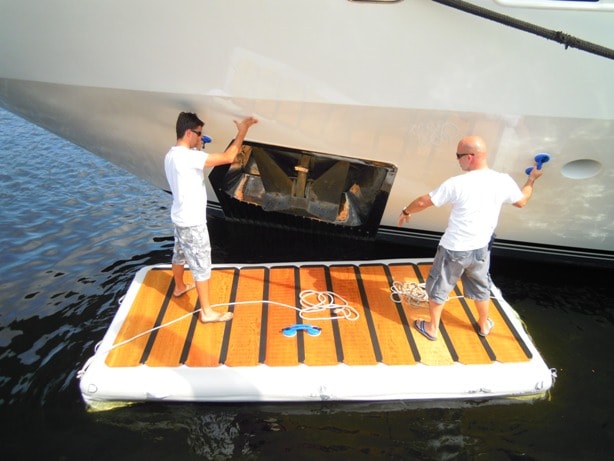 Versifloat founder and inventor, Gerard D’Offay came up with his idea in 2006 before seeking out my help to protect his intellectual property : “I sought out Prof. John Rizvi to help me patent my inflatable docking system. As I have grown my operations over the years John has helped me obtain four additional annexes to my original patent, giving me powerful, robust intellectual propert... Read More